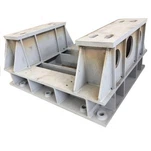


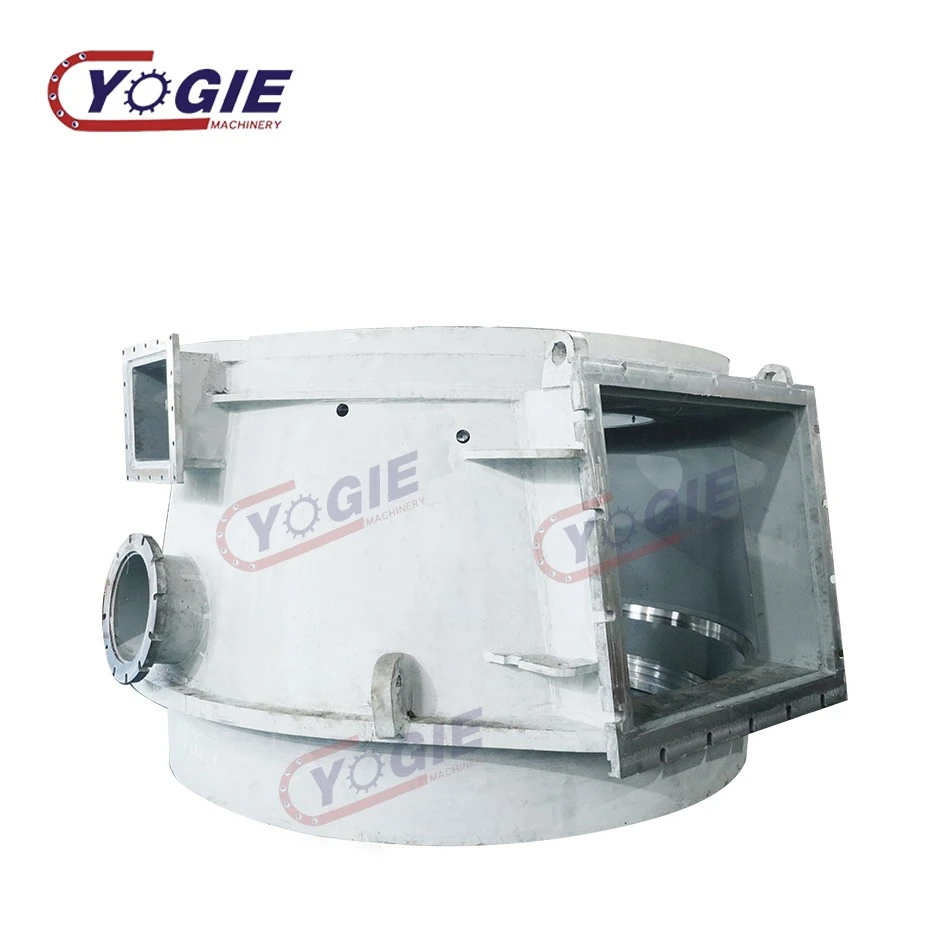


Luoyang Yujie Industry&Trade Co., Ltd is one of the most experienced manufacturers and suppliers of welding housing in China. Please feel free to buy cheap welding housing for sale here from our factory. All customized products are with high quality and competitive price.

welding housing
In the machining and manufacturing field, "welding housing" typically refers to a protective or structural enclosure that is created through a welding process. These housings are often used to house various mechanical or electrical components, such as motors, gearboxes, or other machinery parts, and are typically designed to protect the internal components from damage, contamination, or environmental factors. Welding housing can be made from different materials depending on the application requirements, and the process steps can vary based on the complexity of the design and the materials being used.
Materials Used for Welding Housings
Welding housings can be made from a variety of materials, depending on the intended application and the environment in which they will operate. Some common materials include:
Steel
Carbon steel
Stainless steel (for corrosion resistance)
Alloy steel (for higher strength and durability)
Aluminum
Lightweight and corrosion-resistant, making it ideal for applications in automotive, aerospace, and marine environments.
Cast Iron
Used for heavier applications, especially in industrial machinery and automotive components due to its strength and stability.
Copper Alloys
In some applications, copper alloys (like bronze or brass) are used, especially in environments requiring electrical conductivity or anti-corrosion.
Nickel Alloys
These are used for high-temperature or corrosive environments, particularly in aerospace and power generation.

Welding Processes for Housing Fabrication
The process of fabricating a welding housing typically involves several steps, from design and material selection to welding and post-weld treatment. Below are the main stages of the welding process:
Design and Material Selection
Designing the housing: The design phase involves creating detailed drawings or CAD models of the housing to ensure it meets the functional requirements (e.g., strength, durability, corrosion resistance, etc.).
Material Selection: Choose the appropriate material based on factors like mechanical properties, weight, cost, and environmental conditions.
Cutting and Shaping the Material
The material (plate or sheet) is cut into the required shapes and sizes, either using methods like laser cutting, plasma cutting, or water jet cutting.
The edges are often prepared (e.g., beveled or squared) to ensure proper weld penetration.
Assembly:
The individual components or parts (sides, front, back, and top of the housing) are aligned and temporarily held in place using clamps, fixtures, or tack welding.
Precise alignment is critical to ensure that the final welded housing is square and free from distortion.
Welding
TIG (Gas Tungsten Arc Welding): Often used for precision welds, particularly with stainless steel and aluminum. It offers a high-quality finish but is slower than other methods.
MIG (Metal Inert Gas Welding): Faster than TIG and often used for thicker materials. It's commonly used for steel and aluminum.
Stick Welding (SMAW): Common in heavy-duty applications where portability is needed, though it can be less precise.
Submerged Arc Welding (SAW): Used for thick materials and large housings, providing deep penetration and minimal spatter.
Flux-Cored Arc Welding (FCAW): Similar to MIG but with a flux-filled wire that is useful in outdoor or windy conditions.
The welding process is selected based on the material, thickness, and the desired quality of the weld.
Post-Weld Treatment
Cleaning: After welding, the housing is cleaned to remove slag, spatter, or any remaining contaminants.
Heat Treatment: In some cases, the welded housing may need to undergo heat treatment to relieve stresses or improve the mechanical properties of the material (e.g., annealing or stress relieving).
Surface Finishing: The surface may be ground, sanded, or polished to improve the aesthetic quality or meet specific surface finish standards.
Inspection and Testing
The welded housing is inspected for dimensional accuracy, weld integrity, and surface quality.
Non-destructive testing methods, such as ultrasonic testing, X-ray inspection, or dye penetrant testing, may be used to check for internal defects.
Sometimes, functional testing (e.g., pressure testing for enclosures) is performed to ensure the housing meets operational requirements.
Final Assembly (if required)
If the housing is part of a larger assembly, other components may be installed after welding, such as electrical components, gaskets, seals, or other mechanical parts.
Painting or Coating:
If required, the welded housing may undergo painting or coating (e.g., powder coating, anodizing, or galvanizing) to enhance corrosion resistance or improve aesthetics.
FAQ
Q: Are you trader or factory?
Q: What kind of service can you provide?
Q: Will weld inspection and paint thickness inspection be performed?
A: Yes. We also support third-party testing.
Hot Tags: welding housing, manufacturers, supplier, factory, customized, cheap, price, in stock, for sale, Bearing seat, Bearing pedestal