

As a supplier of the 7313AC P5 bearings, I am often asked about the power consumption of this specific product. In this blog, I will delve into the factors that influence the power consumption of the 7313AC P5, how it compares to other similar bearings, and why understanding power consumption is crucial in various applications.
Understanding the 7313AC P5 Bearing
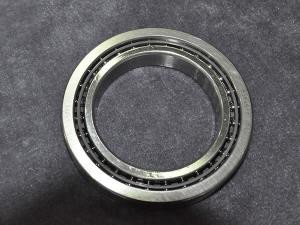
Before we discuss power consumption, let's briefly introduce the 7313AC P5 bearing. The 7313AC P5 is a high - precision angular contact ball bearing. It is designed to handle both radial and axial loads simultaneously, making it suitable for a wide range of industrial applications, including machine tools, automotive transmissions, and aerospace equipment. The "AC" in its name indicates a contact angle of 25 degrees, which is optimized for high - speed operation and load - carrying capacity. The "P5" represents the precision class, which means it has a relatively high level of dimensional accuracy and running accuracy.
Factors Affecting Power Consumption
Friction
Friction is one of the primary factors that contribute to power consumption in bearings. In the 7313AC P5, friction occurs at the contact points between the balls and the raceways, as well as in the lubricant film. The material of the bearing components, the surface finish of the raceways, and the type of lubricant used all play a role in determining the frictional forces.
High - quality materials with low friction coefficients can reduce energy losses. For example, modern bearing steels are designed to have excellent wear resistance and low frictional properties. A smooth surface finish on the raceways also minimizes friction. The lubricant acts as a buffer between the moving parts, reducing direct metal - to - metal contact. Choosing the right lubricant with appropriate viscosity and additives can significantly improve the efficiency of the bearing and reduce power consumption.
Load
The magnitude and direction of the load applied to the 7313AC P5 bearing also affect its power consumption. Higher loads generally result in increased deformation of the bearing components and higher frictional forces. When the bearing is subjected to a heavy radial or axial load, the contact stress between the balls and the raceways increases, which in turn requires more energy to maintain the rotation of the bearing.

In addition, the dynamic nature of the load, such as fluctuating or impact loads, can also have a significant impact on power consumption. These types of loads can cause additional vibrations and increase the wear rate of the bearing, leading to higher energy losses.
Speed
The rotational speed of the bearing is another important factor. As the speed increases, the centrifugal forces acting on the balls and the lubricant also increase. This can lead to changes in the lubricant film thickness and distribution, as well as increased frictional heating. At high speeds, the power consumption of the bearing can rise exponentially due to these effects.
The 7313AC P5 is designed for high - speed operation, but there is still an optimal speed range within which it operates most efficiently. Operating the bearing outside of this range can result in increased power consumption and reduced service life.
Comparing Power Consumption with Other Bearings
When comparing the power consumption of the 7313AC P5 with other bearings, it is important to consider the design and application requirements. For example, compared to standard angular contact ball bearings with lower precision classes, the 7313AC P5 generally has lower power consumption due to its higher dimensional accuracy and better running performance.
There are also other types of bearings, such as deep - groove ball bearings and cylindrical roller bearings, which may have different power consumption characteristics. Deep - groove ball bearings are typically used for light - to - medium - load applications and may have lower power consumption at low speeds. However, for high - speed and high - precision applications, the 7313AC P5 is often a better choice.
You can find more information about high - speed angular contact thrust ball bearings on our website: High - speed Angular Contact Thrust Ball Bearings for CNC Machine Spindle. We also offer High - Speed High Precision Angular Contact Ball Bearings for various industrial needs. And if you are looking for high - precision ball screw support bearings, our 7602 Series,7603 Series and BS Series Ball Screw Support Bearings Instead NSK,INA are worth considering.
Importance of Understanding Power Consumption
Understanding the power consumption of the 7313AC P5 is crucial for several reasons. In industrial applications, reducing power consumption can lead to significant cost savings. Energy - efficient bearings can help companies lower their electricity bills and reduce their carbon footprint.
In addition, lower power consumption is often associated with less heat generation. Excessive heat can cause the lubricant to break down, leading to increased wear and reduced bearing life. By minimizing power consumption, the operating temperature of the bearing can be kept within a safe range, which improves the reliability and durability of the equipment.
How to Optimize Power Consumption
To optimize the power consumption of the 7313AC P5 bearing, the following steps can be taken:
- Proper Installation: Ensure that the bearing is installed correctly, with the correct pre - load and alignment. Improper installation can lead to increased friction and power consumption.
- Lubrication Management: Use the right type of lubricant and maintain the proper lubrication level. Regularly check and replace the lubricant to ensure its effectiveness.
- Load and Speed Optimization: Operate the bearing within its recommended load and speed range. Avoid overloading or running the bearing at excessive speeds.
- Regular Maintenance: Conduct regular inspections and maintenance to detect and address any potential issues early. This can help prevent increased power consumption due to wear or damage.
Conclusion
In conclusion, the power consumption of the 7313AC P5 bearing is influenced by factors such as friction, load, and speed. Understanding these factors and taking appropriate measures to optimize power consumption can lead to significant benefits in terms of cost savings, equipment reliability, and environmental sustainability.
If you are interested in our 7313AC P5 bearings or have any questions about power consumption and bearing performance, we encourage you to contact us for further discussion and potential procurement. We are committed to providing high - quality products and professional technical support to meet your specific needs.
References
- Harris, T. A., & Kotzalas, M. N. (2007). Rolling Bearing Analysis. Wiley.
- Zaretsky, E. V. (2010). Ball and Roller Bearing Engineering. CRC Press.


