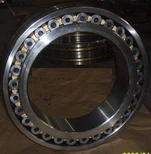


The part that supports the shaft that rotates relatively is called a bearing. Normally, the axis rotates. There are also shafts that do not rotate and the housing rotates, such as automotive wheel bearings. Bearings are divided into rolling bearings and plain bearings.
1, deep groove ball bearings
Deep groove ball bearing is simple in structure and easy to use. It is the largest production batch and the most widely used type of bearing. It mainly uses a radial load, but also can withstand a certain axial load. When the radial clearance of the bearing is increased, it has the function of an angular contact bearing and can withstand a large axial load.
2, self-aligning ball bearings
Self-aligning ball bearings have just two rows, with two raceways in the inner ring, inner raceways in the outer ring raceway, and self-aligning performance. It can automatically compensate for concentricity errors due to shaft misalignment and shell deformation, and is suitable for parts where the support hole does not guarantee tight concentricity. The bearings are mainly subjected to radial load, and they can also bear a small amount of axial load while they are subjected to radial loads. Usually, they are not used to bear pure axial loads. For example, they are subject to pure axial load, and only one ball is subjected to force.
3, angular contact ball bearings
Angular contact ball bearings have higher limiting speeds and can withstand both longitudinal and axial loads as well as pure axial loads. The axial load capacity is determined by the contact angle and increases with the contact angle.
4、CRoss roller bearings
The rollers of a cross roller bearing are usually guided by two ribs of a bearing ring. The cage, the roller and the guide ring form an assembly that can be separated from the other bearing ring and is a detachable bearing. This kind of bearing installation and disassembly is more convenient, especially when the inner ring, the outer ring and the shaft are required to show the advantages.