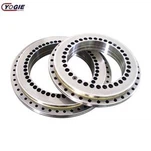


Gear is a commonly used mechanical transmission component. Its main function is to change the speed and torque while transmitting power and torque. Because gears need to withstand extreme loads and friction, they need to have sufficient hardness and strength to ensure their normal operation.
Functions of gears quenching and tempering
Gear quenching and tempering is to improve the hardness and strength of the gear, thereby achieving the following functions:
1. Increase hardness
Through gear tempering, the hardness of the gear can be increased, and its surface hardness and depth hardness can be improved, thereby reducing the wear and fatigue damage of the tooth surface and ensuring the service life of the gear.
2. Increase intensity
The strength of a gear refers to its ability to withstand bending and fatigue loads. Gear tempering can improve the strength and fatigue resistance of the gear, allowing it to withstand greater loads.
3. Improve wear resistance and corrosion resistance
The tempered gear surface has higher wear and corrosion resistance, which can prevent the gear surface from being worn, corroded and oxidized, thereby extending its service life.
The necessity
Because gears need to withstand large loads and friction, their surfaces are easily damaged by wear and fatigue. Tempering can greatly improve the wear resistance, hardness and strength of the gears, thereby ensuring the service life of the gears. At the same time, gear conditioning can also improve the accuracy and stability of gears, avoid noise and vibration problems caused by friction and wear, and ensure the normal operation of gears. Therefore, gear quenching and tempering plays a very important role in machinery manufacturing and is one of the key links to ensure the normal operation of mechanical equipment.
gear tempering method
At present, the main methods for gear quenching and tempering include flame quenching, rolling quenching, carburizing quenching, one-way rotation quenching, etc. Each method has its own characteristics and scope of application, and the appropriate method needs to be selected according to the specific gear material and usage conditions.
In conclusion
As the core component of mechanical transmission, gears need to have sufficient hardness, strength, wear resistance and corrosion resistance to ensure their normal operation. Quenching and tempering is an effective method to improve the hardness, strength and wear resistance of gears, which is of great significance to the reliability and safety of mechanical equipment. Therefore, in machinery manufacturing, gear conditioning is an indispensable part.