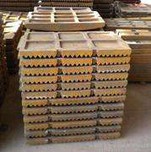


How much do you know about precision forging
Precision forging refers to the forming technology that only needs a small amount of processing or no longer processing to meet the requirements of the part after the part is forged. Precision forging is an important part of advanced manufacturing technology. It is also a widely used part manufacturing process in industries such as automobiles, mining, energy, construction, aviation, aerospace, and weapons. Precision forging not only saves materials and energy, reduces processing procedures and equipment, but also significantly improves productivity and product quality, reduces production costs, and improves product market competitiveness.
Process method
There are many precision forging processes that have been applied in production. According to the different forming temperatures, it can be divided into hot precision forging, cold precision forging, warm precision forging, compound precision forging, isothermal precision forging and so on.
Hot precision forging process
The precision forging process in which the forging temperature is above the recrystallization temperature is called hot precision forging. The hot precision forging material has low deformation resistance and good plasticity and is easy to form more complex workpieces, but due to strong oxidation, the surface quality and dimensional accuracy of the workpiece are low. The commonly used process method for hot precision forging is closed die forging.
Cold precision forging process
Cold precision forging is a precision forging process performed at room temperature. The cold precision forging process has the following characteristics: the shape and size of the workpiece are easy to control, avoiding errors caused by high temperature; the strength and precision of the workpiece are high, and the surface quality is good. In the cold forging forming process, the workpiece has poor plasticity and large deformation resistance, which requires molds and equipment, and it is difficult to form parts with complex structures.
Warm precision forging process
Warm precision forging is a precision forging process performed at a suitable temperature below the recrystallization temperature. Warm forging precision forming technology not only breaks through the limitations of cold forging forming with large deformation resistance, part shapes not being too complex, requiring intermediate heat treatment and surface treatment steps, but also overcoming the reduction of surface quality and size due to strong oxidation in hot forging The problem of accuracy. It has the advantages of cold forging and hot forging at the same time and overcomes the disadvantages of both.
Compound precision forging process
With the increasing complexity of precision forging workpieces and higher accuracy requirements, the simple cold, warm, and hot forging processes can no longer meet the requirements. The composite precision forging process stitches the cold, overflow, and hot forging processes together to complete the forging of a workpiece, which can take advantage of the advantages of cold, warm and hot forging, and abandon the disadvantages of cold, warm, and hot forging.
Isothermal precision forging process
Isothermal precision forging means that the blank is forged and formed at a constant temperature. Isothermal die forging is often used for precision forming of titanium alloys, aluminum alloys, magnesium alloys, and other difficult-to-deform materials in the aerospace industry. In recent years, it has also been used for the precision forming of non-ferrous metals in the automotive and mechanical industries. Isothermal forging is mainly used for metal materials with narrow forging temperature, especially titanium alloys which are very sensitive to deformation temperature.
development trend
With the development of the manufacturing industry, the requirements for precision forging forming parts are getting higher and higher, and higher requirements are put forward for the research and development of the precision forging process. At present, the main directions of precision forging process research are as follows.
(1) Continuous technological innovation. In order to meet the requirements of forming parts and reduce production costs, it is necessary to continuously develop new precision forging forming processes with high forming accuracy, long mold life, and high production efficiency.
(2) Development of composite technology. With the continuous improvement of process requirements for forming parts, it is difficult for a single-precision forging to meet the requirements. This requires the development of composite forming processes, combining forging processes of different temperatures or different process methods, and complementing each other to complete the manufacturing of a part. The precision forging process can also be combined with other precision forming processes such as precision casting, precision welding, and other processes to improve the application scope and processing capabilities of the precision forming process.
(3) Process design based on knowledge. With the continuous development of the precision forging process, process design is becoming more and more complicated. In order to improve the reliability and efficiency of process design, the development of a knowledge-based expert system is an important research direction of precision forging process design in the future
Precision forging equipment
In order to meet the requirements of the precision forging process, precision forging equipment needs to have the following characteristics.
1) It has good rigidity so that the deformation of the machine itself is small during the deformation process, and the dimensional accuracy of the forged workpiece is guaranteed.
2) It has a precise guiding mechanism to ensure the accuracy of mold clamping.
3) With multi-cylinder motion capability, it can achieve the requirements of precision forging multiple die movements.
4) It has the functions of automatic monitoring and detection of the production process.
Commonly used equipment for hot precision forging includes high-energy screw presses, electro-hydraulic hammers, hot die forging presses, etc. Commonly used equipment for cold precision forging forming includes cold forging presses, cold extrusion presses, cold forging machines, and cold pendulum rolling machines Wait.
Luoyang Yujie Industry &Trade Co.Ltdlocated in Luoyang City, one of the main heavy industrial bases in China. We specialize in the production of bearings, nonstandard machinery parts, machine tools. For the bearings, we can offer cross roller bearing, slewing bearing, YRT bearing, thin section bearing, ball screw bearing, deep groove ball bearing, etc. For the nonstandard machine parts, we can produce gears, shafts, sprockets, molds, rollers, pulley, mining machine parts, etc as per customer drawing and requirements. For the machine tools, we offer CNC vertical machine center, CNC horizontal lathe, CNC gantry boring and milling machine, CNC floor type boring, and milling machine.
If you have any interests, feel free to contact us and we warmly welcome customers and friends visit us
Luoyang Yujie Industry & Trade Co., Ltd.
Tel: +86-379-80865527
Fax: +86-379-65136562
Email:sales@yujieindustry.com
ADD: Jianxi Industrial Park, Luoyang City, Henan, China
https://www.yogiemachinery.com/products
Website:https://www.yogiemachinery.com