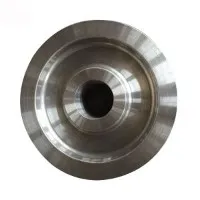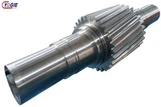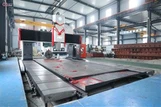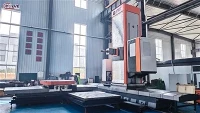





Luoyang Yujie Industry&Trade Co., Ltd is one of the most experienced manufacturers and suppliers of steel sleeve for rolling mill industry in China. Please feel free to buy cheap steel sleeve for rolling mill industry for sale here from our factory. All customized products are with high quality and competitive price.
Steel Sleeve for Rolling Mill Industry
Products Description
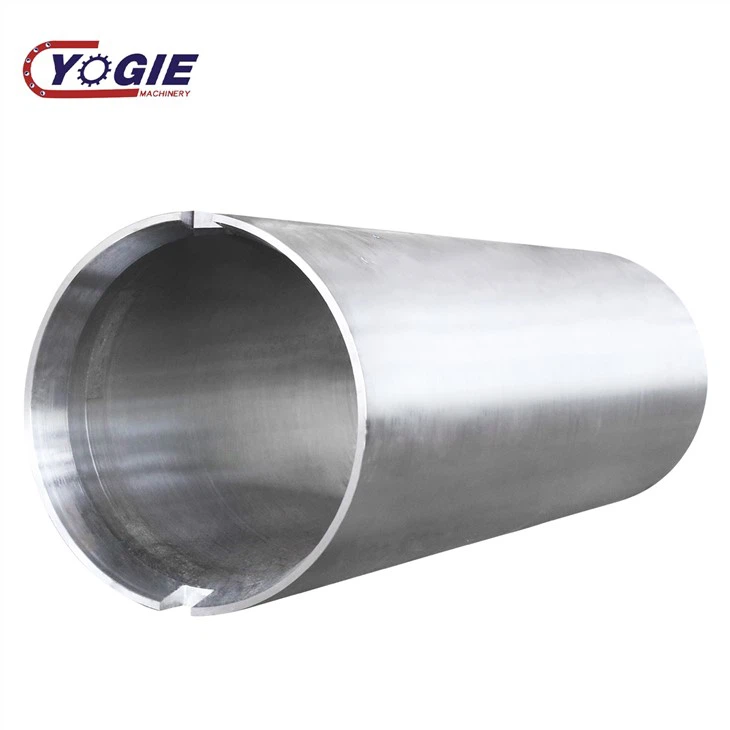
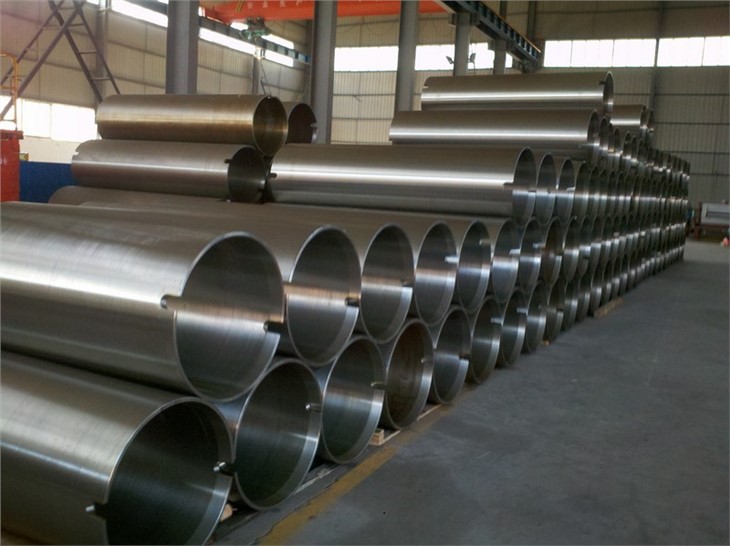
A steel sleeve is a cylindrical component made of steel that is designed to fit around another object or part, often as a protective covering or to provide additional support. Steel sleeves are typically made from a variety of steel alloys, including carbon steel, stainless steel, and alloy steel, depending on the specific application and performance requirements. They can be manufactured through various processes, such as machining, casting, or forging, and can be customized to meet specific size, shape, and tolerance specifications. Steel sleeves may be used to protect vulnerable parts or surfaces from corrosion, abrasion, or wear. They can also provide additional support to parts or components that are subject to heavy loads or stress, such as in a bearing assembly or hydraulic cylinder.
Products Show

Structure and Characteristics of steel sleeve
The structure of a steel sleeve is generally simple, with a cylindrical shape and a uniform wall thickness. The diameter and length of the sleeve can vary depending on the specific application it is intended for.
The characteristics of a steel sleeve can vary depending on the type of steel used in its construction. Some common characteristics of steel sleeves include:
►Strength: Steel is a very strong material, which makes it ideal for use in applications where high strength is required. Steel sleeves can provide reinforcement to structures or pipes, and can help to prevent damage or collapse.
►Corrosion resistance: Steel can be treated with various coatings or finishes to improve its resistance to corrosion. This is important for applications where the sleeve will be exposed to moisture or other corrosive substances.
►Durability: Steel is a durable material that can withstand harsh environmental conditions, such as extreme temperatures or exposure to chemicals. Steel sleeves can provide long-lasting protection for cables, wires, or pipes.
►Weldability: Steel can be easily welded, which allows for the creation of seamless steel sleeves. This is important for applications where a leak-proof seal is required.
►Versatility: Steel sleeves can be used for a wide range of applications, and can be customized to meet specific requirements. They can be made in various sizes, shapes, and thicknesses to suit different needs.
Machinery processing method

Centrifugal casting is a process used to produce cylindrical parts such as steel sleeves. The process involves pouring molten metal into a spinning mold, which causes the metal to be forced outwards against the mold walls due to centrifugal force. This results in a uniform and dense casting with minimal defects.
Processing of Centrifugal casting

►Mold preparation: A cylindrical mold is prepared by machining it to the required dimensions and coating the inner surface with a refractory material to prevent the molten metal from sticking to the mold.
►Pouring the metal: The mold is then mounted on a spinning axis and rotated at high speeds. Molten steel is poured into the mold through a sprue located at the center of the spinning axis. The centrifugal force causes the molten metal to be distributed uniformly and solidify against the mold walls.
►Cooling and solidification: The mold is cooled with water or air to solidify the molten steel. The cooling rate is controlled to ensure the desired microstructure and properties of the steel sleeve.
►Removal of casting: Once the metal has solidified, the spinning axis is stopped, and the mold is removed. The steel sleeve is then extracted from the mold and subjected to finishing operations, such as grinding or machining, to achieve the desired final dimensions and surface finish.
►Inspection and quality control: The steel sleeve is inspected for any defects, such as cracks or voids, and undergoes testing to ensure that it meets the required specifications and standards.
Summary
The centrifugal casting process offers several advantages, including a high degree of accuracy, improved mechanical properties, and a reduced risk of defects. It is commonly used in the production of steel sleeves for various industrial applications.
Advantages
Centrifugal casting is a casting process that involves pouring molten metal into a rotating mold or die. When it comes to the processing of steel sleeves, centrifugal casting offers several advantages:
Improved mechanical properties: Centrifugal casting allows for the production of steel sleeves with enhanced mechanical properties. The centrifugal force during casting helps in the formation of a dense and uniform metal structure, resulting in improved strength, toughness, and wear resistance of the steel sleeve.
Superior casting integrity: The centrifugal force helps in the removal of impurities and gas bubbles from the molten metal, promoting better casting integrity. The absence of voids, porosity, and gas-related defects in the steel sleeve enhances its structural integrity and reduces the risk of failure.
Enhanced dimensional accuracy: Centrifugal casting enables precise control over the dimensions and thickness of the steel sleeve. The centrifugal force distributes the molten metal uniformly along the mold, resulting in consistent wall thickness and accurate dimensions throughout the sleeve. This process reduces the need for extensive machining or finishing operations.
Cost-effective production: Centrifugal casting offers cost advantages in the production of steel sleeves. The process allows for the use of less expensive raw materials compared to other casting methods. It also minimizes material waste since excess metal is forced to the outer regions of the mold, which can be reclaimed and reused. The reduced need for additional machining and finishing operations further contributes to cost savings.
Versatility in size and shape: Centrifugal casting can accommodate a wide range of sizes and shapes for steel sleeves. The rotation of the mold allows for the casting of long, cylindrical sleeves with uniform thickness. The process can also produce flanged or tapered sleeves, as well as sleeves with complex internal features or contours.
Faster production cycles: Centrifugal casting offers faster production cycles compared to traditional casting methods. The rotation of the mold helps in rapid solidification of the molten metal, reducing the cooling time required. This accelerated solidification enables shorter cycle times, resulting in increased production rates and quicker delivery of steel sleeves.
Overall, the centrifugal casting process provides significant advantages in terms of improved mechanical properties, casting integrity, dimensional accuracy, cost-effectiveness, versatility, and faster production cycles when processing steel sleeves.
Application area
Steel sleeves are used in a variety of industrial applications where additional support or protection is required. Some common applications of steel sleeves include:

Piping systems: Steel sleeves are used to protect pipes from corrosion or damage caused by external factors such as soil movement, abrasive materials, or harsh weather conditions.
Hydraulic cylinders: Steel sleeves are used as a protective covering for hydraulic cylinders to prevent damage from debris or harsh environments.
Rotating machinery: Steel sleeves are used in rotating machinery, such as turbines and generators, to provide additional support to the shafts or bearings.
Mining equipment: Steel sleeves are used in mining equipment to protect against wear and tear caused by abrasive materials.
Automotive industry: Steel sleeves are used in the automotive industry in various applications, such as engine components, drivetrains, and suspension systems.
Aerospace industry: Steel sleeves are used in the aerospace industry for various applications, such as landing gear, hydraulic systems, and engine components.
Overall, steel sleeves are a versatile component used in various industries and applications where additional support or protection is required.
About us

Luoyang Yujie Industry &Trade Co.Ltd located in Luoyang City, one of the main heavy industrial bases in China. We specialize in the production of nonstandard machinery parts. For the nonstandard machine parts, we can produce gears, shafts, sprockets, molds, rollers, pulley, sleeve,mining machine parts, etc as per customer drawing and requirements. As a manufacturer , we fouce on the non-standard work pieces as cutomers' custom design.
Contact us
Do you have any specific questions about the Steel Sleeve ? Contact Yogie! Our sales engineers will work with you from start to finish to ensure that your project is completed to your requirements.

tel: +86-379-65163600

phone: +86-15036387078

envelope: sales@yujieindustry.com

fax:+86-379-65163600

address:No. 9 Jingjin North Rd, Luoxin Development Zone, Xin'an County, Luoyang City, Henan Province,CN 471003

whatsapp: 8615036387078
Hot Tags: steel sleeve for rolling mill industry, manufacturers, supplier, factory, customized, cheap, price, in stock, for sale, Bearing pedestal, Bearing seat