


Happy Dragon Boat Festival
This is a poem left by a Tang Dynasty poet about the Dragon Boat Festival.
蛟龙得雨耆鬣动,螮蝀饮河形影联。
刺史临流褰翠帏,揭竿命爵分雄雌。
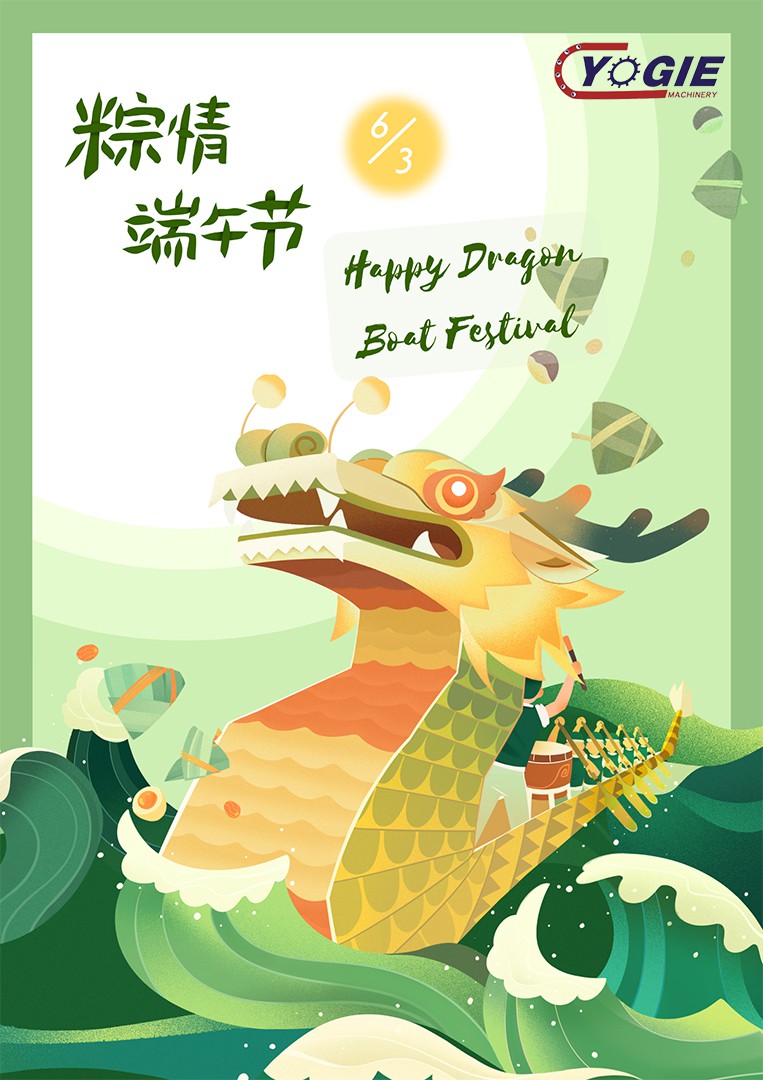
In the 1000-year-old Tang Dynasty, we have come to race dragon boats and eat zongzi to celebrate the Dragon Boat Festival on this day. Therefore, here we wish everyone a safe, happy and healthy Dragon Boat Festival in advance.
Dragon Boat Festival, also known as Duanyang Festival, Dragon Boat Festival, Chongwu Festival, Tianzhong Festival, etc., is a folk festival that integrates worshiping gods and ancestors, praying for blessings and warding off evil spirits, celebrating entertainment and eating. The Dragon Boat Festival originated from the worship of natural celestial phenomena and evolved from the sacrifice of dragons in ancient times. On the Midsummer Dragon Boat Festival, Canglong Qisu flew up to the center of the south, and was in the most "righteous" position throughout the year, just like the fifth line of "Book of Changes Qian Gua": "The flying dragon is in the sky". The Dragon Boat Festival is the auspicious day of "Flying Dragons in the Sky", and the culture of dragons and dragon boats has always run through the inheritance history of the Dragon Boat Festival.
The Dragon Boat Festival is a traditional cultural festival popular in China and other countries in the cultural circle of Chinese characters. It is said that Qu Yuan, a poet of Chu State during the Warring States Period, committed suicide by jumping on the Miluo River on the fifth day of the fifth lunar month. Later generations also regarded the Dragon Boat Festival as a festival to commemorate Qu Yuan; Cao E and Jie Zitui, etc. The origin of the Dragon Boat Festival covers ancient astrological culture, humanistic philosophy and other aspects, and contains profound and rich cultural connotations. In the inheritance and development, it is mixed with a variety of folk customs. Due to different regional cultures, there are customs and details in different places. difference.
The original meaning of the word "Duan" in "Dragon Boat Festival" is "positive", and "wu" is "zhong". "Dragon Boat Festival", "Zhongzheng" is also, at noon on this day is the right of the middle. The ancients used the Heavenly Stems and Earthly Branches as the carrier. The Heavenly Stems carried the Way of Heaven, and the Earthly Branches carried the Way of Earth. In midsummer, noon, noon, and noon, the flying dragon is in the sky. At this time, the dragon star is located in the middle of the sky, which is the most "positive" position in the whole year. The ancients have always advocated the way of “Zhongzheng”, and the “Zhongzheng” way is vividly expressed here. In addition, Duan also means "early", so the first noon day of the noon (May) month is also called the Dragon Boat Festival.
According to statistics, the Dragon Boat Festival has the most names among all traditional Chinese festivals, with more than 20 names, such as Dragon Boat Festival, Chongwu Festival, Duanyang Festival, Duanwu Festival, Chongwu Festival, Dangwuyu Festival, and Tianzhong Festival , Summer Festival, Ai Festival, Sunrise Festival, May Festival, Calamus Festival, Tianyi Festival, Herbal Medicine Festival, Bath Lan Festival, Noon Day Festival, Dila Festival, Zhengyang Festival, Dragon Day Festival, Zongzi Festival, Wuhuang Festival, Poet's Festival, Hiding Noon Festival, Jie Zong Festival, Duan Li Festival, the fifth day of the fifth month, the afternoon of May and so on. The origin of multiple names for the Dragon Boat Festival:
●Duanyang Festival
The ancients used the Heavenly Stems and Earthly Branches in the year, month, day and time. According to the calendar of stems and branches, according to the order of the twelve earthly branches, the fifth month is "Wuyue", and the afternoon is "Yangchen", so the Dragon Boat Festival is also called "Dragon Boat Festival". For "Duanyang".
●Tianzhong Festival
The Midsummer Dragon Boat Festival Canglong Qisu is located in the middle of the sky in the south, and the position is the most "right" and the most "middle". In addition, due to the Dragon Boat Festival, the position of the sun in the sky is the highest in the year for the Tropic of Cancer and the south.
●Chongwu Festival
The ancient method of era of stems and branches uses the heavenly stems and earthly branches as the carrier, and the epochs are generally used for the heavenly stems and earthly branches. The Dragon Boat Festival was originally the noon moon and noon day of the dry and branch calendar, the first month was Jianyin, the fifth month was the noon month, the noon month noon day was called the Chongwu, and the noon month noon day was "Zhongzheng". In the Han Dynasty, due to the unification of the North and the South and the change of the calendar, the imperial court, in order to facilitate the festival, stipulated that the annual Dragon Boat Festival should be changed to the fifth day of the fifth month of the lunar calendar.
●Dragon Boat Festival
The ancient Baiyue nationality used the dragon as the totem to indicate that they were "Dragon Sons". The two main activities of the Dragon Boat Festival, eating rice dumplings and racing boats, were both related to the dragon. Zongzi are put into rivers and waters to worship the dragon god, and dragon boats are used for the race. They not only have the custom of "broken hair tattoo" to "look like a dragon child", but also hold a grand totem festival on the Dragon Boat Festival every year; one of the activities is to carve a canoe in the shape of a dragon in the sound of drums. A game of racing on the water, drawing the gods. This is the origin of the custom of dragon boat racing. Dragon boat rowing is an important activity of the Dragon Boat Festival, so it is also called the Dragon Boat Festival.
● Herbal Festival
The Dragon Boat Festival is the day when the medicinal properties of herbs and trees are the strongest in a year. The Dragon Boat Festival is full of medicines. The herbs collected on this day are the most effective and effective in treating skin diseases and removing evil spirits, hence the name.
●Dragon Festival
In ancient times, the ancestors of Baiyue carried out sacrifices to the dragon on the Dragon Boat Festival. The Dragon Boat Festival was actually a "dragon festival" at that time. On the Midsummer Dragon Boat Festival, "Flying Dragon is in the Sky", Canglong's main star "Big Fire" (Antarctica) hangs high in the middle of the sky, and the Dragon Qi (Yang Qi) is strong. Due to the transformation of Yin and Yang in the Book of Changes, the prosperous will inevitably decline. "Shangjiu" (the sixth line of the Qian Gua) is "the dragon has regrets"; from the perspective of the hexagram, "Shangjiu" is the most yang line, and there is no more The room for improvement is bound to decline. The "Ninth Five-Year Plan" of the Midsummer Dragon Boat Festival is "flying dragon in the sky", and the dragon star is in the most "righteous" position in the whole year, which means that things are in their heyday and it is very auspicious. The "dragon" mentioned in the lines of "Book of Changes Qian Gua" is essentially an elucidation of the operation of the Canglong Qisu at the four seasons of the year.
●Bath orchid Festival
Folks have the custom of picking herbs and boiling water for bathing on the Dragon Boat Festival, so it is also known as the Bathing Orchid Festival.
●Last day
The Dragon Boat Festival is called "Shangri" in some places, which means "the day of God". It also means good day and festival.
●The calamus festival, the moxa festival
The ancients believed that calamus and wormwood had the effect of warding off evil spirits. During the Dragon Boat Festival, the yang energy was prosperous, and the moxa and iris were flourishing. Every year on the Dragon Boat Festival, people had the custom of hanging calamus or wormwood on the door to ward off evil spirits. "Ai Festival".
●When the five flood seasons
In some rural areas in Shanghai, the areas near the north bank of Hangzhou Bay, such as Fengxian, Nanhui and other areas, are customarily called "Duanwu Festival" as "Dangwu Flood Season". There are also some areas called "the afternoon of May".
●Hidden noon festival
In ancient times, the customs of the north and the south were different. "May" was called the "evil month" in the northern and central plains in ancient times. Therefore, in some places on the Dragon Boat Festival, parents sent children under one year old to their grandmother's house to hide. Avoid evil, so it is called "Hidden Noon Festival".
●Diwa Festival
Taoism divides the year into Wula, the first day of the first lunar month, and the fifth day of the fifth lunar month. According to the "Emperor to Dao Taiqing Jade Book" and "Yunji Seven Notes", the fifth day of the fifth month in May is the day when the five emperors gather together. Seeing the good and evil deeds by the descendants of the world, to convict the blessing, and to set the official title of the new person. Taoism believes that several ten days of the year are auspicious days, suitable for worshiping ancestors and gods to obtain blessings.
Do you have any specific questions about the supplier of Machining Services? Contact Yogie! Our sales engineers will work with you from start to finish to ensure that your project is completed to your requirements.
Also, Yogie is a professional manufacturer for Mining Equipment, CNC Machine Tools, and Machinery Parts for over 20years.