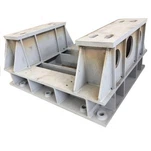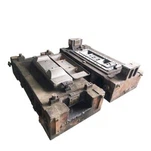


Shaft forgings are a kind of forgings with a wide range of applications.These shafts also have good processing performance.In practical applications, they do not have any porosity or other defects, so they not only have a good appearance guarantee, but also With excellent quality, let's introduce how to meet the requirements of shaft forgings will be very popular.

types of materials
There are many types of materials for gear shaft forgings. The common materials for gear forgings are: 40Cr, 42CrMo, 20CrMnMo, 20CrMnTi, etc.
42CrMo and 40Cr forged gears are mostly in the lifting industry, and large-scale gear forgings are mainly used. 20CrMnMo, 20CrMnTi are mostly used in forging gears of transmission machinery, and small parts have no main (reference). Most of the gears need to be geared. The heat treatment hardness of the gears can reach good performance at 38-42HRC.
The toughness of 42CrMo is much better than 40Cr, because the former has good heat treatment hardenability, which is closely related to its material. Also, the strength at the same hardness is very close. In the best performance, the tensile strength of 40Cr is 60-75 kg / mm2, the yield strength is 35-55 kg / mm2; the tensile strength of 42CrMo is 110 kg / mm2, and the yield strength is 95 kg / mm2, obviously the performance of 42CrMo Better performance than 40Cr.
40cr
The 40Cr material has good hardenability, it can be hardened to a diameter of 28-60mm during water quenching, and can be hardened to a diameter of 15-40mm during oil quenching. After quenching and tempering, the material has good comprehensive mechanical properties and has good Low notch sensitivity and low temperature impact toughness. After tempering treatment, 40Cr gear forgings are often subjected to surface high frequency fire or nitriding treatment. When the hardness is 174-229HBS, the cutting performance is good, the relative cutting workability is 60%, and the carbon content of 40Cr forgings is kept at about 0.40%, which ensures that the steel has a good combination of strength and toughness.
The addition of Cr element is mainly to improve the hardenability of steel. When heated by fire, Cr element completely dissolves in austenite and improves the hardenability of steel. After quenching, Cr element solid solution strengthens the matrix structure and improves the tempering stability of the matrix structure. During high temperature tempering, some Cr elements diffuse from the matrix structure to the precipitated cementite Fe3C to form alloy cementite (Cr, Fe) 3C.

The main chemical components (mass fraction) of 40Cr steel for gear shaft forgings produced by gear shaft manufacturers are:
| C | 0.17% ~ 0.37% | 0.50% ~ 0.80% | 0.80% ~ 1.10% | 0.035% | 0.035% |
| 0.37% ~ 0.44% | Si | Mn | Cr | P | S |
The phase transition points are: Ac1770 ℃, Ac3805 ℃, Ms328 ℃.
The initial forging temperature of 40Cr gear forgings is 1100 ~ 1150 ℃, and the final forging temperature is 800 ℃. After forging, the size needs to be cooled slowly when the size is more than 60mm. Tips for gear shaft manufacturers: The material of gear shaft forgings must first meet the requirements of working conditions. The requirements of working conditions are the factors that should be considered first when selecting gear forging materials. High reliability is required, so alloy steel with high mechanical properties must be selected.
If the gear size is required to be as small as possible, surface-hardened high-strength alloy steel should be used. The gear transmission in mining machinery generally has high power, low working speed, and extremely high dust content in the surrounding environment. Therefore, cast steel or cast iron is often selected. The power of household and office machinery is very small, but it requires stable transmission, low noise or no noise, and can work normally with little or no lubrication. Therefore, engineering plastics are often used as gear materials.
Summary
The selection of gear shaft forging materials should consider the gear size, blank forming method and heat treatment process. Large-sized gears generally use cast blanks, and cast steel or cast iron can be used as gear materials. Gears with high requirements for medium or below size are often made of forged blanks, and can be made of forged steel. When the size is small and the requirements are not high, round steel can be used as the blank.