

What are roller bearings and what do they do?
Roller Bearings
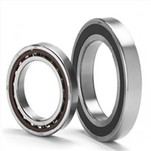
Roller bearings, also known as rolling bearings, are intended to carry loads while decreasing friction, similar to ball bearings. Roller bearings, on the other hand, instead of using balls to transfer stress, employ distinct cylindrical rolling pieces to keep the bearing's moving elements in place. These bearings have single or multiple rows of rolling components, and several rows can considerably enhance radial load capacity. To reduce friction and bear radial and axial pressures, several roller shapes might be utilized.
All Bearings may be found here.
Although roller bearings may tolerate more loads than ordinary ball bearings, they are most commonly utilized in low-speed applications. Self-aligning roller bearings can swiftly overcome misalignment and mounting issues, eliminating the need for maintenance, repair, and labor. Roller bearings come in a range of shapes and sizes, and they may also be customized for special purposes. To meet specific application requirements, flanges, cages, and extra bearing rows can be employed to increase performance.
The Different Types of Roller Bearings and Their Applications
Cylindrical roller bearings

These bearings have rollers that are longer than their diameters and can take higher loads than ball bearings. Our cylindrical roller bearings can sustain high radial stresses and are suitable for high-speed applications.
Spherical roller bearings

Even when the axis is bent and misaligned, they can bear massive loads. They can be formed into cylindrical or tapered holes for connections with or without a socket adaptor. Self-aligning roller bearings feature a choice of internal clearance and cage options, and can sustain axial loads in either direction as well as high impact loads. These bearings come in a range of aperture sizes ranging from 20 to 900 mm.
Needle roller bearings

Inner rings may or may not be present in this form of bearing, which is smaller than standard roller bearings. Needle roller bearings are ideal for high-speed, heavy-duty applications that have limited radial space. While keeping a short cross section, the ram cup design provides for massive grease storage and excellent load capacity. Seals are available in Imperial or metric sizes with these bearings.
Taper roller bearings

Radial and thrust loads may be supported by these bearings. The backbrace requires a second transverse reverse bearing since it can only resist unidirectional axial tension. English and metric sizes of tapered roller bearings are offered. Roller bearings are utilized in a wide range of applications, including heavy machinery, power generation, manufacturing, and aerospace.
Crossed roller bearings

Because of their excellent rotational precision, they are widely employed in machine tools, industrial robots, and medical equipment.
A cage or divider, as well as a complete complement design, are available as roller guide choices. For high-speed spinning, both the cage and separator designs have a low coefficient of friction. At low speeds, full complement bearings can handle heavy loads.
There are both sealed and open styles available. Seals made of synthetic rubber protect sealed bearings from dust, dirt, and oil.
Do you have any specific questions about the design or manufacture of Cross roller bearings or Rotary table bearings? Contact Yogie! Our sales engineers will work with you from start to finish to ensure that your project is completed to your requirements.
Also, Yogie is a professional manufacturer for mining equipment, CNC Machine tools, and machinery parts for over 20years.