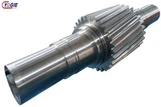


Luoyang Yujie Industry&Trade Co., Ltd is one of the most experienced manufacturers and suppliers of forging shaft in China. Please feel free to buy cheap forging shaft for sale here from our factory. All customized products are with high quality and competitive price.
Products Description
A forging shaft refers to a component that is produced through the process of forging. Forging is a manufacturing process that involves the shaping of metal using localized compressive forces. The process is typically carried out at high temperatures, making the metal more malleable and easier to shape. The resulting forged shafts often exhibit superior strength and other mechanical properties compared to those produced through alternative methods like casting.
Products show

Processing

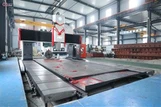
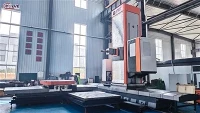
machinery processing of forging shaft
The production of forged shafts involves several key steps in the forging process. The machinery used in forging operations can vary depending on the size and complexity of the shaft being produced. Here is an overview of the typical machinery and the steps involved in forging a shaft:
Raw Material Preparation:
Raw materials, often in the form of metal billets or bars, are cut to the required length based on the specifications of the shaft to be forged.
Heating:
The raw material is heated to high temperatures to make it malleable for forging. This is typically done in a furnace.
Preforming:
The heated material is then subjected to preforming operations to achieve a general shape before the final forging. Preforming may involve upsetting (increasing the cross-sectional area) or drawing out (reducing the cross-sectional area) of the material.
Forging:
The preformed material is transferred to a forging press or hammer for the actual forging process. The forging machinery exerts high pressure or impact forces on the heated material to shape it into the desired form. There are different types of forging processes, including:
Open-Die Forging: The metal is shaped between flat dies with little constraint on the material flow.
Closed-Die Forging: The material is placed within a die that contains the desired shape, allowing for more precision.
Upset Forging: The material is compressed and shaped by upsetting it in the vertical direction.
Trimming:
After forging, excess material or flash is removed from the forged part. This can be done using trimming presses or other cutting tools.
Heat Treatment:
The forged shaft may undergo heat treatment processes such as quenching and tempering to achieve the desired mechanical properties, such as hardness and toughness.
Machining:
In some cases, the forged shaft may undergo additional machining processes to achieve specific dimensional tolerances and surface finishes. This can include turning, milling, or grinding.
Inspection:
The forged shaft is inspected for quality, dimensional accuracy, and any defects. Non-destructive testing methods, such as ultrasonic testing, may be employed to ensure the integrity of the forged part.
Surface Treatment:
The final step may involve applying surface treatments such as coatings or finishes to enhance corrosion resistance or improve aesthetics.
Features of forging shaft
Strength and Durability: Forged shafts are known for their exceptional strength and durability. The forging process aligns the grain structure of the metal, providing better mechanical properties and resistance to fatigue.
Improved Metallurgical Properties: Forging improves the metallurgical properties of the material, such as grain flow, which contributes to better toughness and overall performance.
Precision: Forging allows for precise shaping of the shaft, leading to tight tolerances and high-quality surface finishes.
Customization: Forging can be tailored to produce shafts with specific dimensions, shapes, and properties, allowing for customization to meet particular engineering requirements.
Reduced Material Waste: Compared to some other manufacturing methods, forging can result in less material waste, contributing to cost-effectiveness and sustainability.
functions of forging shaft
Power Transmission: Forged shafts are commonly used in various applications where power needs to be transmitted from one component to another. This can include machinery, automotive systems, and industrial equipment.
Support and Rotation: Forged shafts are frequently used in rotating components such as gears, pulleys, and sprockets. Their strength and durability make them suitable for applications where significant loads and stresses are involved.
Critical Components in Engineering: Forged shafts are often employed in critical components of machinery, ensuring the reliability and safety of the overall system.
Aerospace Applications: In aerospace engineering, forged shafts can be used in components like landing gear and other structural elements where high strength and reliability are paramount.
Oil and Gas Industry: The oil and gas sector commonly uses forged shafts in applications such as drilling equipment, where the shafts need to withstand harsh environmental conditions and heavy loads.
applications of forging shaft
Automotive Industry:
★Crankshafts: Forged crankshafts are used in internal combustion engines to convert the reciprocating motion of the pistons into rotational motion.
★Axles: Forged shafts are employed as axles in automotive drivetrains, providing strength and reliability.
Aerospace Industry:
★Landing Gear Components: Forged shafts are used in the landing gear assemblies of aircraft, ensuring the necessary strength to withstand the forces during takeoff and landing.
★Jet Engine Components: Critical parts of jet engines, such as turbine shafts, are often forged for their high strength and heat resistance.
Oil and Gas Sector:
★Drilling Equipment: Forged shafts are utilized in the drilling industry for components like drill bits and rotary drill stems, where high strength is essential.
★Pipeline Valves: Forged shafts are used in the construction of pipeline valves that require durability and resistance to high-pressure environments.
Power Generation:
★Turbine Shafts: Forged turbine shafts are crucial components in power generation systems, such as steam and gas turbines.
★Generator Shafts: Forged shafts are used in the construction of generator rotors and other components in power plants.
Heavy Machinery and Equipment:
★Gears and Gear Shafts: Forged shafts are commonly used in the production of gears and gear shafts for heavy machinery and equipment.
★Hydraulic Components: Forged shafts are employed in the manufacture of hydraulic system components due to their strength and resistance to wear.
Mining Equipment:
Mine Shaft Equipment: Forged shafts are used in various mining applications, including components for hoisting equipment and mine shaft machinery.
Marine Industry:
Propeller Shafts: Forged shafts are used in the construction of marine propeller shafts, providing the necessary strength and corrosion resistance.
Railway Industry:
Axles and Connecting Rods: Forged shafts are used in the railway industry for the production of axles and connecting rods in locomotives and rolling stock.
Construction Equipment:
Crane Components: Forged shafts are employed in the construction of crane components, including the boom and lifting mechanisms.
FAQ
Q: Are you trader or factory?
Q: What kind of service can you provide?
Q: Will weld inspection and paint thickness inspection be performed?
A: Yes. We also support third-party testing.
Hot Tags: forging shaft, manufacturers, supplier, factory, customized, cheap, price, in stock, for sale, Shaft processing, Shaft used for Vessel, Machinery Processing, Shaft with groove, Forging Pinion Shaft, precision machining