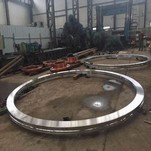


The custom shaft has been delivered today

The custom shafts have been delivered today and they will be shipped to Australia.
Spools are usually suspended from the ceiling and run the length of a room. The shaft's pulley would be powered by a bus shaft located elsewhere in the structure. Other pulleys on each machine will power the pulleys or succeeding spools. The design of a system in manufacturing, when a large number of machines do the same work, is rather regular and repetitive. With numerous alternative shafting orientations and pulley diameters, the system might look unstable and inconsistent in other applications, such as machine and wood workshops, where there are many machines with varying orientations and power needs. Shafts are often horizontal and above ground, although they can also be vertical and subterranean. Shafts are generally made of strong steel and are made up of many pieces that are fastened together at flanges. A hanger with bearings suspends the shaft at predetermined length intervals. The distance is determined by the shaft's weight and the number of pulleys. The shaft must remain aligned at all times, or the bearing will overheat and possibly damage the shaft. Friction bearings are the most common and must be greased. Employees who work as lubricators on pulleys must guarantee that bearings do not freeze or fail.
A loop of rope on a slotted pulley was used to transmit power between pulleys in the early uses. This approach, which dates largely from the 18th century, is exceedingly unusual nowadays. A flat belt on a pulley or roller was the most prevalent method in the 19th and early 20th centuries. Tanned leather or cotton duck soaked in rubber are the most common materials for belts. Leather or wire ties, lap joints and adhesive, or one of various steel fasteners are used to keep the belt in the ring. Metal fasteners or heat are commonly used to join cotton duck straps. For the optimum traction, the hair side of the belt lies against the pulley. Belts must be cleaned and adjusted on a regular basis to stay in excellent shape. On each leg, the belt normally twists 180 degrees before reversing on the receiving pulley, rotating the second axis in the opposite direction.
Do you have any specific questions about the manufacture of Shafts? Contact Yogie! Our sales engineers will work with you from start to finish to ensure that your project is completed to your requirements.
Also, Yogie is a professional manufacturer for mining equipment, CNC Machine tools, and machinery parts for over 20years.